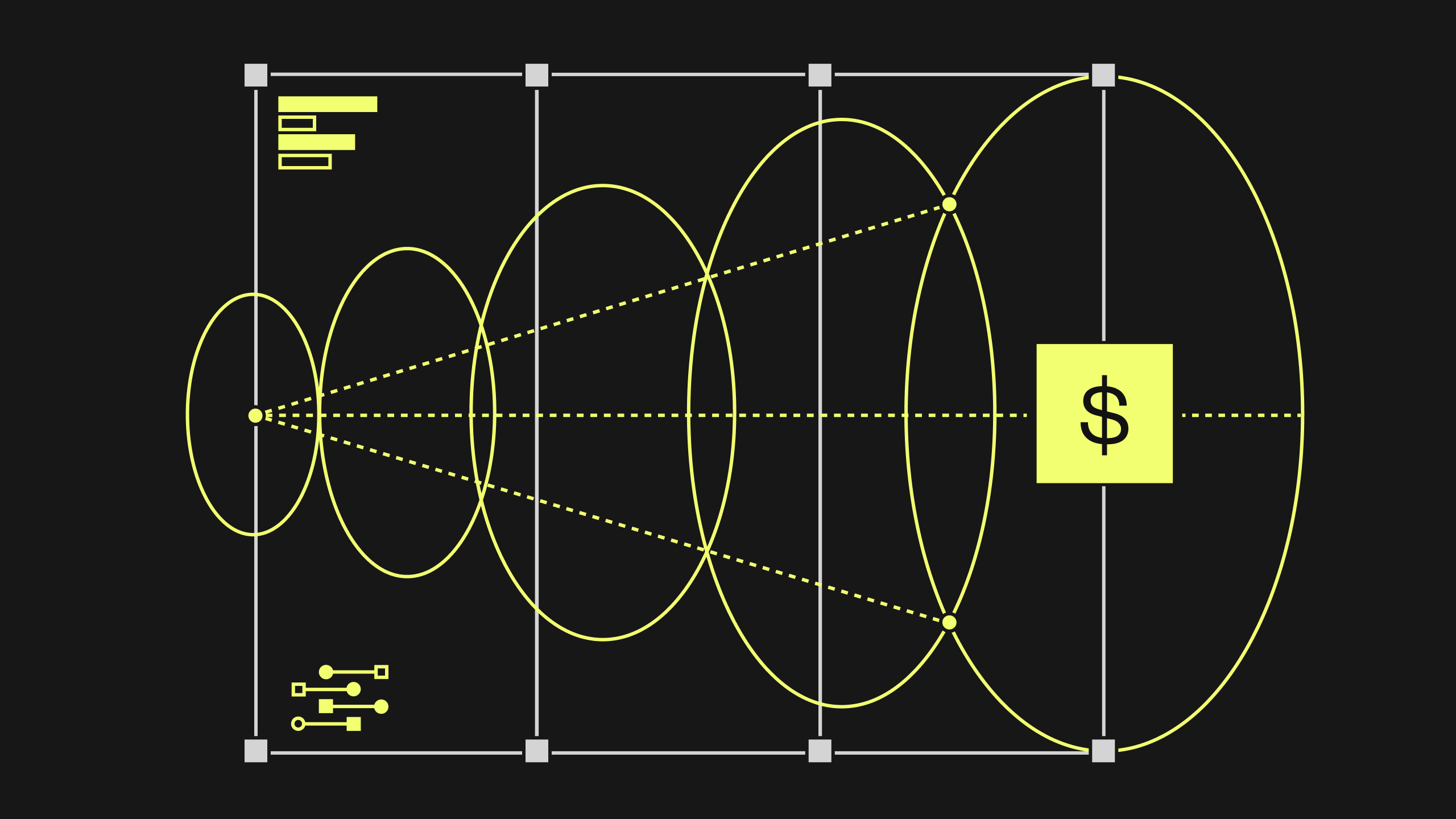
Procure-to-pay looks like a clean, linear sequence: someone requests a purchase, it gets approved, a purchase order goes out, goods arrive, an invoice comes in, it gets matched and approved, and the supplier gets paid. On paper, every step is well understood, and most organizations have software for each. Yet P2P remains one of the most persistently broken cycles in finance. The reason is that it rarely breaks inside any single step. It breaks at the handoffs between them, between procurement and receiving, between receiving and AP, between the systems that each own a piece of the cycle but do not connect. And because AP sits at the end of the chain, the breaks that originate upstream in procurement surface as AP problems. Here is where the P2P cycle actually breaks, and what AI does and does not fix. For the AP end in detail, see Accounts Payable Automation: The 2026 Guide.
TL;DR
Procure-to-pay (P2P) is the full cycle from purchase requisition to supplier payment: requisition, approval, purchase order (PO) creation, goods receipt, invoice capture, invoice matching, payment approval, and payment/reconciliation. It spans two functions, procurement (which raises requests and manages suppliers) and accounts payable (which processes invoices and pays), and it is broader than AP automation, which is a subset of P2P covering only the invoice-to-pay end.
The key insight is that P2P does not usually break inside the individual steps; it breaks at the handoffs between them. Each system (procurement, receiving, ERP, AP) may perform its own step correctly, but the cycle still fails because the information, approvals, and documents have to move across the boundaries between systems and teams, and that movement depends on manual coordination, email, spreadsheets, and re-keying. As one industry analysis puts it, most teams do not lack a process; they lack a connected one. The symptoms, maverick and off-PO spend, approval bottlenecks, missing or mismatched POs, duplicate and late payments, no real-time spend visibility, are all manifestations of the same root cause: broken handoffs between procurement and finance.
A crucial consequence for finance is that most AP pain originates upstream. When an invoice arrives with no PO to match against, the cause is not an AP failure; it is a procurement step (raising a PO) that did not happen. When an invoice will not match, the cause is often a wrong PO or a missing goods receipt upstream. So fixing AP in isolation treats the symptom; fixing the P2P handoffs treats the cause.
AI, specifically agentic AI that can reason rather than just follow rules, changes P2P by handling the work at the handoffs: catching off-PO purchases at requisition, generating POs and chasing acknowledgements, reading and matching invoices including the exceptions, resolving discrepancies across systems, and carrying context across the boundaries that manual coordination used to bridge. Reported results where this works are significant: cycle time falling from 14 to 28 days down to 2 to 4 days, and large reductions in approval time, reconciliation time, and cost per invoice.
What procure-to-pay is (and how it relates to AP)
Procure-to-pay (P2P, also written purchase-to-pay) is the end-to-end cycle that begins when someone in the business needs to buy something and ends when the supplier is paid. It spans both procurement (identifying the need, approving it, ordering, managing the supplier) and accounts payable (receiving the invoice, matching, approving, paying), which is precisely why it is so often messy: it crosses the boundary between two functions that traditionally run as separate worlds.
The cycle runs through a consistent set of steps: a purchase requisition is raised (someone requests goods or services), it is approved, a purchase order is generated and sent to the supplier, the goods or services are received and a goods receipt is recorded, the supplier's invoice arrives and is captured, the invoice is matched against the PO and goods receipt, the matched invoice is approved for payment, and the payment is released and reconciled. Some organizations add sourcing and contracting on the front (which extends P2P into the broader "source-to-pay"), but the P2P core is requisition through payment.
The relationship to AP automation is important and often confused: accounts payable automation is a subset of procure-to-pay automation. AP automation covers the invoice-to-pay end, capturing, matching, approving, and paying invoices, while P2P covers the whole journey from requisition through payment, including the procurement steps (requisition, approval, PO, receipt) that happen before the invoice ever arrives. This distinction matters because, as the rest of this post argues, many of the problems that show up in AP actually originate in those earlier procurement steps, so the P2P view is necessary to see the real causes. AP automation optimizes the end of the cycle; P2P automation addresses the whole cycle, including the upstream steps and, crucially, the handoffs between them. For more on where AP and P2P diverge and what each covers, see the AI Tools for Finance and Accounting: 2026 Category Map.
Where P2P actually breaks: the handoffs, not the steps
The central insight about P2P, and the one that explains why it stays broken despite every step having software, is that the cycle breaks at the handoffs between steps and systems, not within the steps themselves. Each function and system can do its own job correctly, and the transaction still fails because it depends on manual coordination to move across the boundaries.
Consider the structure. Procurement owns requisitions, approvals, and POs, often in a procurement system. Receiving records goods receipts, sometimes in yet another system or on paper. The ERP holds the financial records. AP processes invoices, often in an AP tool. Each of these performs its piece, but the cycle requires information to flow between them: the PO from procurement to AP (so the invoice can be matched), the goods receipt from receiving to AP (so delivery can be confirmed), the approval from the budget owner to AP (so payment can proceed). When these handoffs depend on people moving information, emailing the PO, re-keying data, calling to confirm receipt, that is where the cycle breaks. As one analysis puts it, the steps exist but live in different systems and depend on people to move information between them; most teams do not lack a process, they lack a connected one.
The common symptoms of P2P dysfunction are all manifestations of broken handoffs:
- Maverick and off-PO spend: buyers purchase outside the process, so no PO is raised, and the handoff to AP has nothing to match against
- Approval bottlenecks: requests sit in an inbox waiting on someone out of office, because the approval handoff has no routing or escalation
- Missing or mismatched POs: the PO does not reach AP or does not agree with the invoice, turning matching into detective work
- Duplicate and late payments: manual handoffs between procurement and AP cause the same invoice to be paid twice or paid late
- No real-time spend visibility: because the data does not flow across the systems, finance sees committed spend only after the fact, at month-end
Every one of these is a handoff failure, not a step failure. The requisition system works, the AP system works, but the transaction falls into the gap between them. This is why P2P should not be treated as a set of independent steps to automate individually, but as a connected flow where the value, and the breaks, are in the connections. Automating each step in isolation while leaving the handoffs manual, which is what a collection of point tools does, leaves the actual breaks in place.
Why AP pain originates upstream
For finance leaders, the most important consequence of the handoff insight is that most AP pain originates upstream, in procurement, even though it surfaces in AP. This reframes where to look for the cause of AP problems, and it is the strongest argument for the P2P view over the AP-only view.
The clearest example is the non-PO invoice, one of the biggest sources of AP effort. When an invoice arrives with no PO to match against, AP has to determine what it is for, how to code it, and who approves it from scratch, which is slow and manual. But the root cause is not an AP failure; it is that a PO was never raised upstream, the requisition either did not happen or bypassed the process (maverick spend). The fix is upstream: catch the purchase at requisition and raise a PO then, so the invoice arrives with something to match against, rather than trying to cope with the PO-less invoice at the AP end. The AP pain is a symptom; the procurement handoff is the cause. For more on why non-PO invoices are so hard to process, see Non-PO Invoice Automation: Handling Invoices Without a Purchase Order.
The same pattern holds across AP's hardest problems. Invoices that will not match are often caused by a wrong or incomplete PO, or a missing goods receipt, both upstream issues, not AP errors. For a detailed look at how matching works and what breaks it, see Two-Way vs Three-Way vs Four-Way Match: When to Use Each. Approval delays on invoices often trace to approval structures that should have been resolved at PO time. Duplicate payments often arise from the disconnect between procurement's records and AP's. In each case, AP is where the pain is felt, but procurement (or the handoff from it) is where the problem is created. Treating these as AP problems, and buying AP automation alone to fix them, addresses the symptom while leaving the cause, the broken upstream step or handoff, in place, which is why AP automation on its own so often disappoints relative to the promise.
This is the core argument for the P2P view: because the causes of AP pain are frequently upstream, you cannot fully fix AP by looking only at AP. You have to fix the P2P cycle, especially the requisition-to-PO step and the handoffs into AP, to address the causes rather than the symptoms. Owning the full cycle, not just the AP end, is what lets you prevent the problems (raise the PO at requisition, confirm receipt cleanly, carry the data through) rather than cope with them after they land in AP. This is the sense in which AP automation is necessary but not sufficient: the AP end must work, but the upstream cycle and its handoffs are where many of the AP problems are actually determined.
Where AI fits: fixing the handoffs
AI changes P2P specifically by addressing the handoffs and the upstream causes, which is where the cycle actually breaks, and the distinction between rule-based and reasoning-based AI matters here.
Traditional P2P automation relies on workflows and predefined rules, which handle the clean, standard path but break at variation, exactly the exceptions and cross-system messiness where the handoffs fail. Agentic AI, which can interpret documents, reason about context, and take actions, handles the variation: it reads an invoice in any format, reasons about a mismatch, investigates a discrepancy across systems, and carries context across the boundaries, rather than breaking when reality deviates from the script. This is the same rule-versus-reasoning distinction that separates RPA from agentic automation generally: rule-based automation breaks when a format or field changes, while reasoning-based agents adapt. For more on this distinction applied to finance, see RPA vs Agentic AI in Finance: 6 Key Differences for CFOs.
Across the P2P cycle, AI addresses the break points:
- At requisition: catches off-PO and out-of-policy purchases before they become PO-less invoices, and can raise a fast-track PO at requisition time, fixing the upstream cause of the non-PO invoice
- At PO and acknowledgement: generates POs from approved requisitions and monitors for supplier confirmation, handling routine supplier back-and-forth
- At receipt: helps confirm and reconcile deliveries against POs
- At invoice and matching: reads any invoice format and performs matching with tolerance reasoning, resolving the format variations, missing PO numbers, and partial receipts that force invoices into manual queues
- At exceptions: proposes resolutions based on patterns rather than escalating every variance to a human
- Across the whole cycle: carries context between the steps, which is the handoff work that manual coordination used to do
The reported results where this works end to end are substantial: cycle times dropping from 14 to 28 days down to 2 to 4 days, approval times cut by up to 70%, reconciliation time by up to 50%, and invoice processing cost by up to 80%, with best-in-class exception rates around 9% versus a roughly 14% average.
This is where a deterministic, agentic platform like Kognitos fits the P2P picture, honestly scoped. Kognitos is not a full procure-to-pay or source-to-pay suite (platforms like Coupa, SAP Ariba, Ivalua, Zip, and others provide the procurement front end: requisitioning, sourcing, catalogs, PO management) and not the ERP that holds the financial system of record. Its relevance is the reasoning-and-exception work at the handoffs and the AP end: reading and reasoning about invoices (including the non-PO and mismatched invoices that originate upstream), performing and resolving matching across the PO, receipt, and invoice, investigating discrepancies that span systems, and carrying the context across the procurement-to-AP boundary, all deterministically and with a full audit trail. Because P2P breaks at the handoffs between systems, and because resolving those breaks requires reading unstructured information and reasoning about cross-system discrepancies rather than following a fixed rule, this is exactly the agentic, deterministic capability Kognitos provides, and it operates across the procurement system, the ERP, and the AP process rather than replacing any of them.
In P2P terms, Kognitos is the reasoning layer that handles the breaks at the handoffs: the off-PO invoices, the mismatches, the missing receipts, the cross-system coordination, which is where the cycle actually fails and where rule-based automation cannot reach. It works alongside the procurement suite and ERP, resolving the exceptions and carrying the context that the handoffs require. The underlying approach, neurosymbolic AI applied through English as Code, means finance and procurement teams can define and refine the policies (what is off-PO, what requires escalation, how to code an invoice) in plain language, so the rules stay current as the organization's policies change, without requiring developer reconfiguration. For a fuller picture of how Kognitos supports the AP and broader P2P surface, see Finance & Accounting Automation Solutions.
Book a working session with a Kognitos solutions engineer → Try Kognitos free →
The honest caveats: clean process and connected data first
Two honest cautions matter for any P2P automation effort, because they determine whether it delivers.
Automating a broken process scales the breakage. A recurring finding in P2P implementations is that poor ROI usually stems from weak process and operating-model maturity rather than the technology, and that the goal is to automate a clean process. Structural process issues have to be addressed before automation can deliver stable results. If the requisition process is chaotic, the approval structures unclear, or the handoffs undefined, automating that as-is scales the chaos rather than fixing it. The implication is to fix the obvious structural problems (define the requisition process, the approval matrix, the receipt process) as part of, not after, automation.
Master data and connection are the foundation. P2P automation depends on clean, connected data across the systems. Poor master data creates friction across the whole cycle, slowing onboarding, complicating requisitions, and introducing invoicing errors. The value of P2P automation comes specifically from data flowing between stages instead of being re-keyed. So the foundational work is ensuring the vendor master data is clean (connected to the vendor onboarding discipline covered in Vendor Onboarding Automation: From Application to Approval) and that the systems are connected enough for data to carry through. Automation that sits on disconnected systems and dirty data cannot deliver the connected flow that is the whole point.
Both caveats reinforce the central theme: P2P value is in the connections, so the process and data underneath the connections have to be sound. This is also why the reasoning-and-exception layer matters: it handles the real-world messiness and cross-system variation that clean-process assumptions never fully eliminate, but it works best on a foundation that is as clean and connected as practical.
How to think about P2P automation as a leader
For a finance or procurement leader, a few principles follow from the handoff insight:
Look at the whole cycle, not just AP. Because AP pain often originates upstream, diagnose problems across the full P2P cycle rather than only at the AP end. The cause of an AP problem is frequently a procurement or handoff issue that AP automation alone will not fix.
Focus on the handoffs. The breaks are at the boundaries between procurement, receiving, and AP, so prioritize connecting those handoffs (data flowing through, context carried across) over optimizing individual steps that already work.
Fix the upstream causes, not just the downstream symptoms. Address the non-PO invoice by catching the purchase at requisition; address the matching failure by getting the PO and receipt right upstream, rather than only coping with the symptoms in AP.
Distinguish the suite from the reasoning layer. A procurement or P2P suite provides the front-end workflow (requisitions, catalogs, PO management); the reasoning-and-exception layer handles the variation and the cross-system breaks. Most organizations need both, and the reasoning layer is what addresses the handoff breaks the suite's workflows do not.
Insist on clean process and connected data first. Do not automate a broken process or build on disconnected, dirty data. Address the structural process and master-data issues as part of the automation, since automation amplifies whatever foundation it sits on.
Measure cycle time end to end. Track requisition-to-pay cycle time (not just invoice-to-pay), along with exception rate, touchless rate, and cost per invoice, so you see the whole cycle's performance and where it breaks. For which AP metrics to track and what benchmarks to target, see Accounts Payable KPIs: The Metrics That Actually Matter in 2026.
The throughline: P2P delivers its value when the whole cycle is connected and the handoffs work, so the leader's job is to see the cycle whole, fix the handoffs and upstream causes, build on clean process and connected data, and apply the reasoning layer where the variation and cross-system breaks are. That is what turns P2P from a collection of individually-automated-but-collectively-broken steps into a connected flow that largely runs itself.
Putting it together
Procure-to-pay is the full cycle from requisition to payment, spanning procurement and accounts payable, and AP automation is a subset covering only the invoice-to-pay end. The defining insight is that P2P does not break inside the steps, which each have working software, but at the handoffs between them: the boundaries between procurement, receiving, the ERP, and AP, where information has to move across systems and teams and depends on manual coordination to do so. The familiar symptoms (maverick spend, approval bottlenecks, missing or mismatched POs, duplicate and late payments, no real-time visibility) are all manifestations of broken handoffs, not step failures.
Crucially for finance, most AP pain originates upstream: the non-PO invoice, the unmatched invoice, the approval delay are usually caused by a procurement step or handoff that failed, so fixing AP alone treats the symptom while the cause remains. AI, specifically reasoning-based agentic AI, fixes P2P by addressing the handoffs and upstream causes: catching off-PO spend at requisition, generating POs, resolving matching and discrepancies across systems, and carrying context across the boundaries, cutting cycle time from weeks to days.
Honestly scoped, a platform like Kognitos is the reasoning-and-exception layer that handles the breaks at the handoffs, working across the procurement suite and ERP rather than replacing them, on a foundation of clean process and connected data. P2P's value is in the connections, which is exactly where it breaks and where AI, applied well, fixes it.