Key Takeaways
This post explains how self-maintaining automation works through the auto-monitor stage of Kognitos’ hyperautomation lifecycle (HAL), the platform’s approach to agentic process automation. After a workflow is auto-written from an SOP, auto-deployed, and auto-tested, auto-monitor continuously observes the performance, health, and security of every active automation. It maintains a plain-English system of record so business users can understand automation status without coding, and its proactive exception handling pauses and asks for human guidance rather than breaking. Crucially, HAL is an interconnected, self-maintaining ecosystem: auto-monitor flags issues, and over time the Kognitos brain learns to auto-debug, auto-write fixes, and auto-test edge cases, reducing the need for manual intervention. The result is reduced downtime, improved reliability, and retained control. The takeaway: HAL manages the entire automation lifecycle, delivering truly autonomous agents that improve themselves, a stark contrast to fragile RPA workflows.
Kognitos’ innovative hyperautomation lifecycle (HAL) platform offers an end-to-end solution that automates the entire lifecycle of automation and sets Kognitos apart as the leader in agentic process automation (APA). Built on a serverless infrastructure, HAL combines generative AI with deterministic logic to deliver reliable, repeatable, and hallucination-free AI agents.
The hyperautomation lifecycle begins by auto-writing a workflow based on an SOP, simple instructions, or a predefined prompt. Your process becomes a powerful AI agent, completely managed within the HAL platform. Processes are then auto-deployed with the click of a button, instead of months of setup and testing as with traditional RPA deployment. Any updates to your AI agents are auto-tested to validate that they will function reliably under any conditions, including edge cases.
Then what? Let’s explore the next stage of the hyperautomation lifecycle: auto-monitor.
Continuous Observation and Assessment
As soon as an automation is deployed, HAL’s auto-monitor stage continuously observes and assesses performance, health, and security of every active automation within the platform.
Plain English System of Record
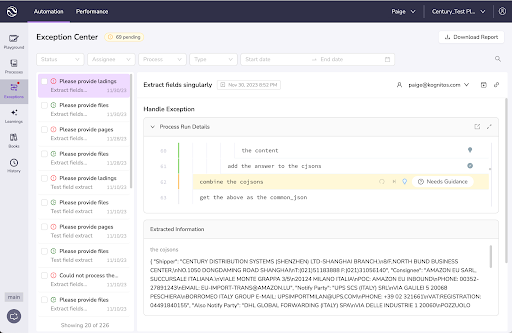
The auto-monitor stage of HAL creates an accessible system of record in plain English. Business users can easily understand the status of their automations, no technical expertise or coding knowledge required. This reduces IT bottlenecks and simultaneously democratizes access for key stakeholders within the organization.
Exception Handling and Human Intervention
HAL’s proactive approach to exception handling identifies potential issues without breaking the automation. The system notes exceptions, pauses, and asks for human guidance if needed. The review process is quick and easy, so AI agents can deliver consistent results at peak efficiency.
The Interconnected Hyperautomation Lifecycle
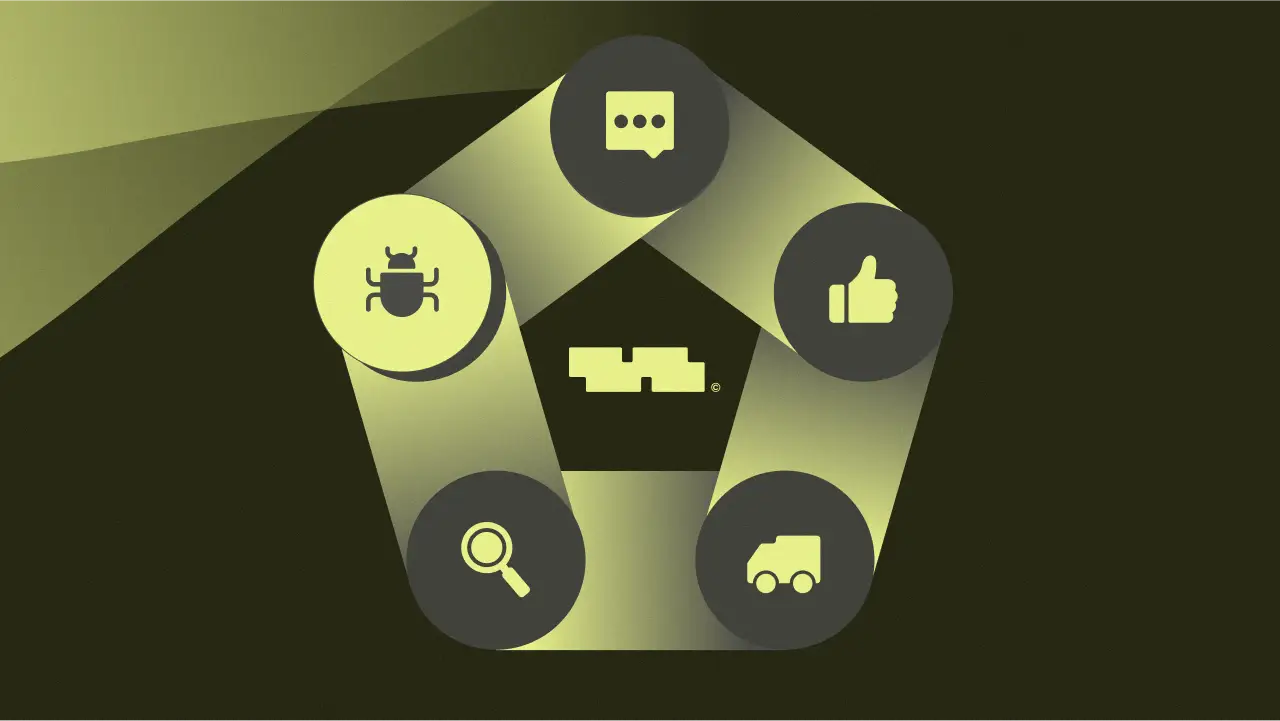
Auto-monitor’s impacts extend beyond simply observing and flagging active automations. The hyperautomation lifecycle is a self-maintaining ecosystem where each stage can actively communicate with the others. For example, auto-monitor notes issues and gets a human involved when it needs help. Over time, the need for human intervention reduces. The Kognitos brain learns how to auto-debug similar exceptions, auto-write new automations to address issues, and auto-test edge cases after adjustments are made.
This creates truly autonomous AI agents capable of improving performance over time without the need for manual intervention.
With HAL, organizations can:
- Reduce downtime
- Improve reliability of automations
- Minimize the need for manual intervention
- Maintain control
Experience the Power of HAL
Transform the way your organization approaches automation by ditching fragile RPA workflows and exploring HAL. Kognitos stands apart as an end-to-end APA solution that automates tasks, but also manages the entire lifecycle of AI agents.
If you’re a CIO or technology leader looking to adopt AI that can provide massive ROI in months, not years, reach out to our team to book a custom demo of Kognitos’ HAL.
How to Use HAL Auto-Monitor for Self-Maintaining Automation
- Define the health metrics that Auto-Monitor should track for each automation. Auto-Monitor needs configuration: which metrics indicate healthy operation, what thresholds trigger an alert, and what automated response (if any) should occur when a threshold is breached. Define these parameters for each monitored automation.
- Configure Auto-Monitor alerts with appropriate severity levels. Not every automation health signal requires the same response. Configure alert severity levels: informational (for tracking), warning (for investigation), and critical (for immediate response). Alert severity determines who is notified and how fast.
- Integrate Auto-Monitor with your incident management system. Auto-Monitor alerts should create incidents in your ITSM for tracking and response. Configure the integration between Auto-Monitor and your ITSM so that critical alerts automatically create incidents with the alert context attached.
- Review Auto-Monitor logs weekly to identify performance trends. Proactive review of Auto-Monitor logs surfaces performance trends before they become failures. Weekly log review should identify: increasing exception rates, growing processing times, and recurring warning conditions that indicate a deteriorating automation.
- Use Auto-Monitor data to prioritize automation maintenance and improvement. Auto-Monitor data is the objective basis for automation maintenance prioritization. Automations with deteriorating performance metrics require attention before they fail. Use monitoring data to make maintenance investment decisions rather than responding only to reported failures.