Key Takeaways
This post contrasts the painful deployment of traditional RPA, where over half of projects reportedly fail, with Kognitos’ Hyperautomation Lifecycle (HAL) platform. Shipping a legacy RPA bot means provisioning a virtual machine, matching the development environment, allocating licenses, connecting to a server, and manually packaging and assigning the automation, all before anything runs. HAL collapses this: you use auto-write to build the automation in natural language, then click a button to publish it to production. Because HAL runs on invisible cloud infrastructure, there is minimal setup and no risk of human error during packaging or deployment. Auto-deploy is one of five lifecycle stages, alongside auto-write, auto-test, auto-monitor, and auto-debug, powered by a neurosymbolic brain that pairs generative AI with deterministic logic for self-maintaining agents. The result: less time, lower cost, and higher reliability. Learn more about the agentic process automation approach or book a demo.
Organizations using robotic process automation (RPA) know the time and effort that goes into successfully deploying a new process. In fact, there is a long-standing statistic from EY that reports that over 50% of RPA projects fail, many of those never getting out of an early proof of concept phase. Understanding why that is the case is important to appreciate how AI-native solutions like Kognitos completely transform the experience for today’s IT teams.
Let’s cover the challenges to the incumbent RPA process deployment. Assuming there’s already a server in place, it looks something like this for a Windows-deployed bot:
- Set up a virtual machine where the bot will be installed
- Go into the machine and configure the connection with the server.
Note: this machine must be configured to match the environment where the automation was developed. One example might be ensuring browsers are set up ahead of time to avoid any popups prompting the user to set it as the default browser - Install the local development environment.
Note: local development tools require a license, so an admin must allocate licenses in the server - Connect the development machine to the server
- Build the automation and upload it to the server
- Assign the automation to be run by specific bots
- Then, trigger the automation to run on one of the associated bots
This is a simplistic view of the effort required and doesn’t even account for the time spent developing, debugging, testing, and packaging the automation prior to deployment. Until now, this RPA process has been the de facto automation solution on the market because of its ability to handle automation workflows, despite the challenges presented by actually deploying a single process and the limitations in complexity for the use cases it serves.
Kognitos offers an alternative to the time-consuming deployment process of traditional RPA solutions with our hyperautomation lifecycle (HAL) platform.
Auto-Deploy on HAL
Kognitos’ HAL platform solves even the most complex automation challenges in natural language, without the headaches of initial deployment and the maintenance challenges that inevitably arise with RPA. Powered by a neurosymbolic brain, HAL combines the creativity of generative AI with deterministic logic to create powerful, self-maintaining AI agents.
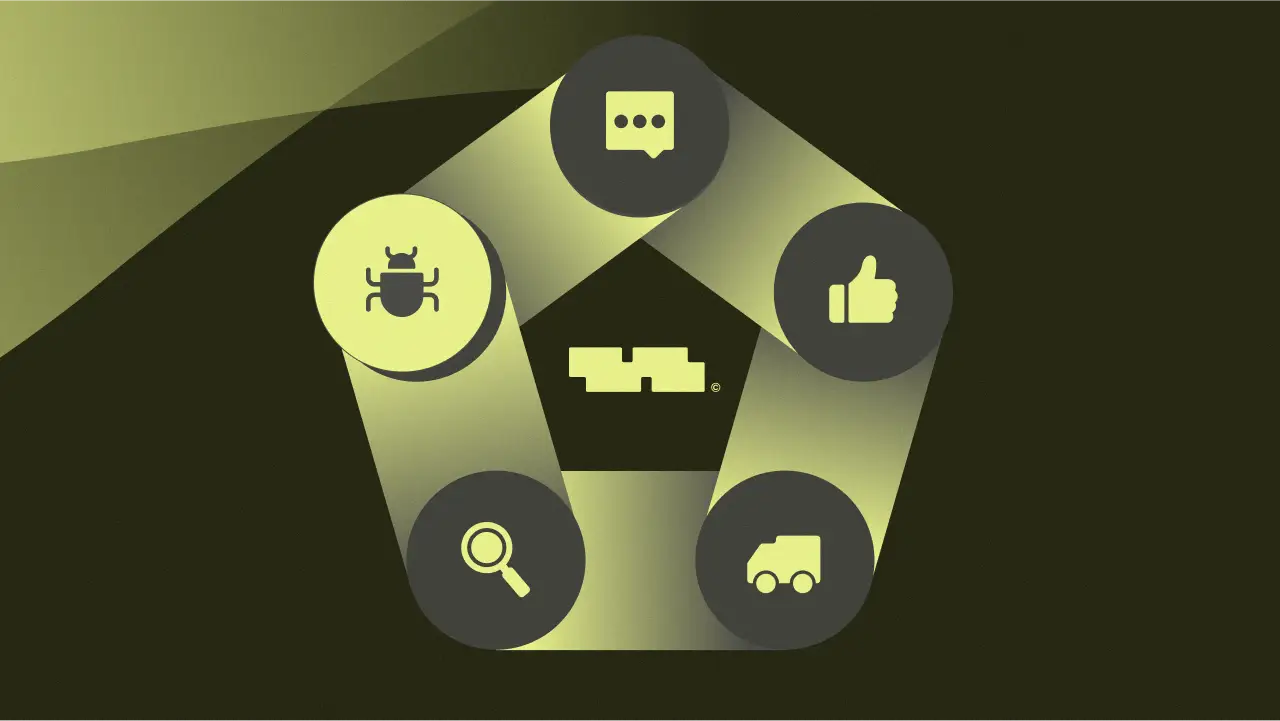
Enterprise organizations looking to streamline workflows or eliminate the roadblocks of other, legacy automation solutions should look to HAL as an end-to-end agentic process automation solution. HAL is capable of automating the entire lifecycle of automation during these five core stages of the lifecycle:
- Auto-write
- Auto-test
- Auto-deploy
- Auto-monitor
- Auto-debug
Auto-deploying workflows to production on HAL is wildly different from deploying traditional RPA. It can dramatically shorten implementation time and reduce maintenance headaches. Here’s what it looks like to deploy your first automation with Kognitos’ HAL:
- Use the auto-write feature to create and implement code for your automation
- Click a button to publish it as a process
It’s that simple.
HAL auto-deploys workflows from playground to production effortlessly. The platform runs on an invisible cloud infrastructure, so there’s minimal setup required. And when AI agents are deployed to production with the click of a button, there’s no risk for human error during packaging or deployment
The Impact of Auto-Deploy
Auto-deploy saves time, reduces costs, and improves reliability. HAL is revolutionizing how businesses approach enterprise-grade automation. For CIOs looking to stay on the forefront of agentic process automation, Kognitos provides a powerful solution.
If you’re ready to experience the power of Kognitos’ HAL platform, sign up for our community version of HAL, or reach out to a member of our team for a personalized demo for your use cases today.


