Key Takeaways
Hyperautomation, the Gartner-coined strategy that whatever can be automated must be, is reframed here around a continuous lifecycle rather than a sprawling tech stack. The post notes that incumbent providers delivered slow progress, high costs, limited scale, and fragility, and that leaders now want consolidation. Kognitos’ Hyperautomation Lifecycle (HAL) platform is presented as an integrated answer spanning five stages: auto-write (turning SOPs into automations without code), auto-test, auto-deploy on serverless infrastructure, auto-monitor with a natural-language system of record, and auto-debug. HAL combines agentic AI with deterministic programming, makes autonomous decisions yet pauses for human input through patented conversational exception handling, and secures endpoints behind API gateways to lower total cost of ownership. The takeaway for technology leaders is that a unified hyperautomation lifecycle enables efficiency, agility, and continuous learning without overhauling the existing stack.
Hyperautomation and agentic AI will allow organizations to streamline processes, boost efficiency, and stay competitive in ways that haven’t been seen before. Enterprise technology leaders have a clear opportunity to harness these recent technological developments to drive organizational success by combining the power of hyperautomation with the execution of AI agents.
What is Hyperautomation?
Originally coined by Gartner, hyperautomation is more than just another buzzword in the automation landscape (see: agentic AI), it’s an enterprise-level strategy that enables automation at scale. Whatever can be automated, must be automated.
Hyperautomation was originally conceived of as a network of tools to automate virtually every process within an organization. In the years since Gartner first introduced the concept, the definition has shifted slightly. Rather than relying on a complex tech stack to automate workflows within an organization, many leaders are looking to consolidate incumbent platforms while still achieving the same level of automation.
Incumbent automation providers have met challenges every step of the way with slow progress, high costs, limited scale, and fragility. Hyperautomation has the potential to overcome these challenges.
Kognitos and the Hyperautomation Lifecycle (HAL) Platform
While many solutions offer automation components that work in tandem with additional platforms to hyperautomate processes, Kognitos’ HAL platform provides an integrated solution that encapsulates every stage of the hyperautomation lifecycle. HAL is designed not just to automate tasks, but also to manage and optimize them.
What is Hyperautomation Lifecycle?
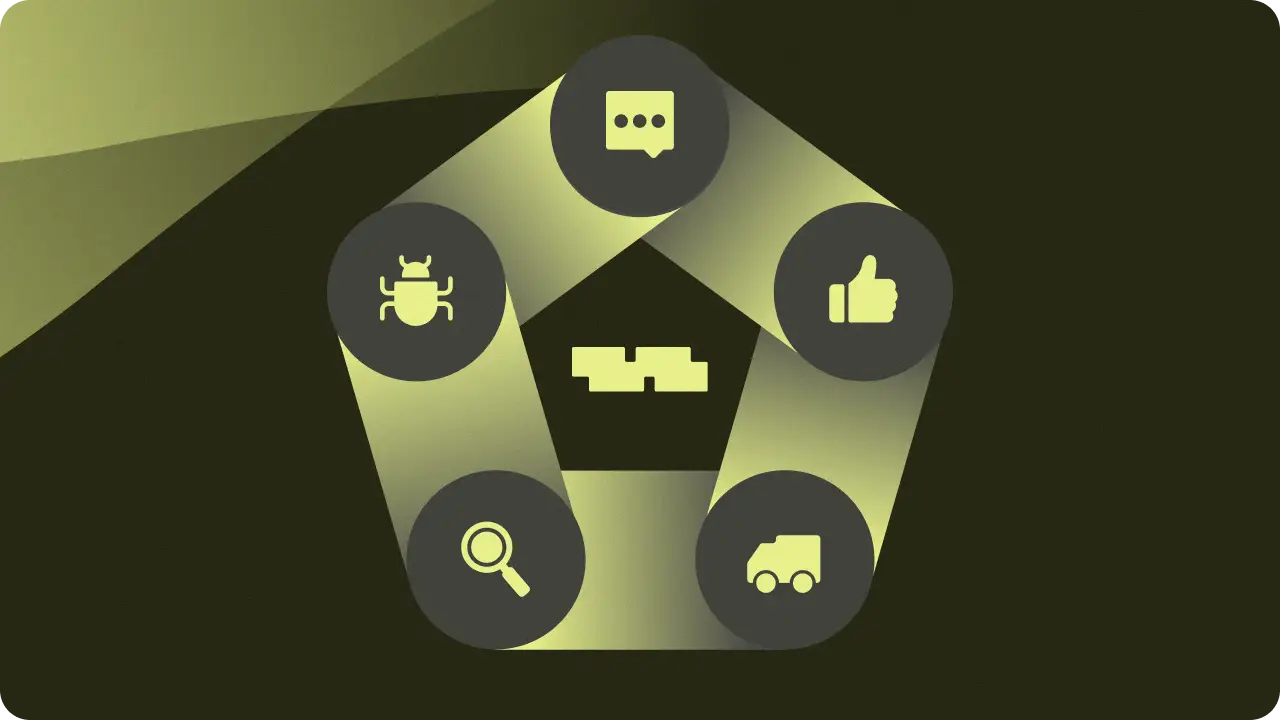
The concept of hyperautomation looks beyond what automation can achieve today to emphasize a continuous lifecycle of improvement. The hyperautomation lifecycle provides a systematic approach over these key stages:
- Auto-write: Turn simple instructions or a standard operating procedure (SOP) into a powerful automation, eliminating the need for complex coding, jargon, or technical expertise
- Auto-test: Simulate multiple scenarios and edge cases to verify the functionality and reliability of automated workflows without manual intervention
- Auto-deploy: Release automations on an invisible, serverless infrastructure for rapid and reliable workflows without the risks for human error
- Auto-monitor: Observe and assess performance, health, and security of automations with a system of record accessible in natural language. The system should pause to ask for human guidance when it meets an exception, instead of breaking
- Auto-debug: Apply bug fixes and confirm with a human team member when issues are encountered during the auto-monitor stage
-
How Kognitos’ HAL Leverages the Principles of Hyperautomation
HAL has created a unified automation ecosystem, as opposed to the disparate systems and platforms in legacy hyperautomation efforts. The cloud-based, scalable platform seamlessly integrates with existing technologies, allowing CIOs to execute upon hyperautomation strategies without overhauling their current tech stack.
Minimize exposure to external threats with HAL’s scalable infrastructure. Most endpoints, except for user interfaces (UI) and management APIs, are inaccessible through the public internet. The UI endpoints are safeguarded through API gateways, ensuring an added layer of protection. All this is made possible by the fact that our platform is underpinned by a serverless technology, allowing you to avoid maintaining underlying infrastructure, reducing costs and driving down total cost of ownership.
We combined intuitive generative AI with deterministic programming to create HAL, the trusted platform that combines accuracy with flexibility. Throughout the lifecycle, HAL can make autonomous decisions, but recognizes when it needs human input, and trusts the expertise of the team.
When HAL meets an exception, it asks for human input in natural language. Our patented conversational exception handling allows anyone who knows the process to provide the platform with feedback, so it can quickly adapt to drive perpetual refinement
The Technology of Tomorrow
For technology leaders eager to leverage cutting-edge technologies, the potential rewards of hyperautomation are immense: greater efficiency, enhanced operational agility, and the capacity to foster a culture of constant learning and adaptation.
As the landscape of business continues to change, hyperautomation is not just an opportunity, it’s a mandate. With Kognitos’ Hyperautomation Lifecycle platform, organizations have the means to not only catch up with the future but to lead it. Embrace hyperautomation with HAL and craft the dynamic, intelligent enterprise of tomorrow.
How to Navigate the Hyperautomation Lifecycle
- Define hyperautomation as a continuous program, not a one-time deployment. Hyperautomation is the continuous application of multiple automation technologies (RPA, AI, process mining, workflow orchestration) to automate as much business process as possible. Define it as an ongoing program with annual targets, not a project with a completion date.
- Start with process discovery to identify the automation opportunity universe. Process mining and discovery tools map the actual execution paths of business processes from system logs. Use process discovery to identify automation candidates based on volume, cycle time, exception rate, and automation feasibility. Discovery quantifies the opportunity.
- Deploy a portfolio of automation technologies appropriate to each process type. Hyperautomation uses multiple technologies: RPA for stable structured processes, AI document automation for document-intensive workflows, agentic AI for multi-step orchestration, and ML for prediction and optimization. Assign the appropriate technology to each process type.
- Implement continuous measurement across the automation portfolio. Hyperautomation programs require continuous measurement: automation coverage rate, touchless processing rate, maintenance cost per automation, and exception rate. Continuous measurement identifies where the program is performing and where investment is needed.
- Scale the hyperautomation CoE to govern the growing automation portfolio. As the automation portfolio grows, the Center of Excellence must scale to govern it: platform standards, security reviews, performance monitoring, and change management. CoE capacity determines the sustainable rate of automation deployment.


