You cannot monitor your way out of a backlog. Yet, for the last few years, the standard enterprise response to SLA breaches has been better dashboards, louder alarms, and more complex ticketing systems. We build war rooms to track missed deadlines and generate post-mortem reports to explain why a critical invoice wasn’t processed or why an IT ticket sat stale for 48 hours.
This approach is fundamentally flawed. It treats SLA breaches as a management failure- something that can be fixed by whipping the team harder or hiring more bodies.
The reality for Finance and IT leaders at Fortune 1000 companies is different. A service level agreement breach is rarely the result of laziness. It is a symptom of brittle technology. When your automation tools cannot handle the unexpected, they stop. They throw exceptions. They create queues. And in those queues, your SLAs die.
To permanently reduce SLA breaches, we must stop admiring the problem with monitoring tools and start solving it with adaptive, intelligent execution.
Defining the Failure: What is an SLA Breach?
At its core, a service level agreement breach occurs when a service provider fails to meet the agreed-upon standards of service within a specific timeframe. In the context of back-office operations- like Accounts Payable, Claims Processing, or IT Support- an SLA breach usually means a transaction took too long to complete.
While most organizations track these metrics religiously, they often conflate tracking with solving. Knowing that you have 500 SLA breaches in your AP department this month is useless if you lack the mechanism to process them faster next month.
The Cost of Inaction
When an SLA violation occurs, the damage is rarely contained to a single metric.
- Financial Penalties: Many vendor contracts include strict clauses where SLA breaches result in credits or fines.
- Operational Drag: Every breach requires manual intervention, pulling high-value employees into low-value firefighting roles.
- Reputational Damage: Internal trust erodes. When IT consistently logs SLA breaches on support tickets, shadow IT proliferates.
The Root Cause: Why Do SLA Breaches Happen?
If you analyze a list of SLA breaches across any large enterprise, you will find a common denominator: Exceptions.
Traditional automation and rigid workflow tools are binary. They follow a script. If an invoice arrives with a layout that matches the template, it is processed instantly. But business is rarely static. Vendors change formats. Employees submit tickets with incomplete data. Unstructured emails arrive with urgent requests hidden in the body text.
When these anomalies occur, rigid automation breaks. It cannot reason; it can only halt. The transaction is kicked out of the fast lane and dumped into a manual exception queue.
This is where the clock starts ticking. The item sits in a queue until a human sees it, understands the context, and manually fixes it. This wait time- the gap between the exception occurring and the human resolving it- is responsible for the vast majority of SLA breaches.
Why Legacy Automation Accelerates Breaches
It is ironic that the very tools purchased to prevent delays often cause them. Legacy Robotic Process Automation (RPA) is notoriously brittle. A minor change in a software update or a UI element can cause a bot to fail.
When a bot fails, it doesn’t just fail once; it fails for every subsequent transaction until it is patched. This leads to massive spikes in SLA breaches that occur overnight.
Consider the types of SLA breaches common in legacy environments:
- Availability Breaches: The automation bot is offline or broken.
- Quality Breaches: The bot processed the data, but scraped the wrong field because the coordinates shifted.
- Turnaround Time Breaches: The volume of requests exceeded the number of bot licenses available.
Legacy tools force you to choose between speed and accuracy. If you want speed, you risk quality. If you want accuracy, you introduce manual checkpoints that slow everything down.
The Shift: From Reactive Monitoring to Structural Prevention
To truly eliminate SLA breaches, we must move beyond “managing” them. Tools like ServiceNow or dedicated breach monitors are excellent at telling you that you are bleeding, but they do not stop the bleeding.
The solution lies in Generative AI and Neurosymbolic Automation.
Kognitos approaches the problem differently. Instead of building rigid scripts that break on contact with reality, Kognitos builds agents that learn. We utilize an approach called English as Code, allowing business users to define processes in natural language.
1. Conversational Exception Handling
This is the “killer app” for preventing SLA breaches. When Kognitos encounters an anomaly- say, an invoice date that looks ambiguous- it does not throw the item into a silent queue to rot.
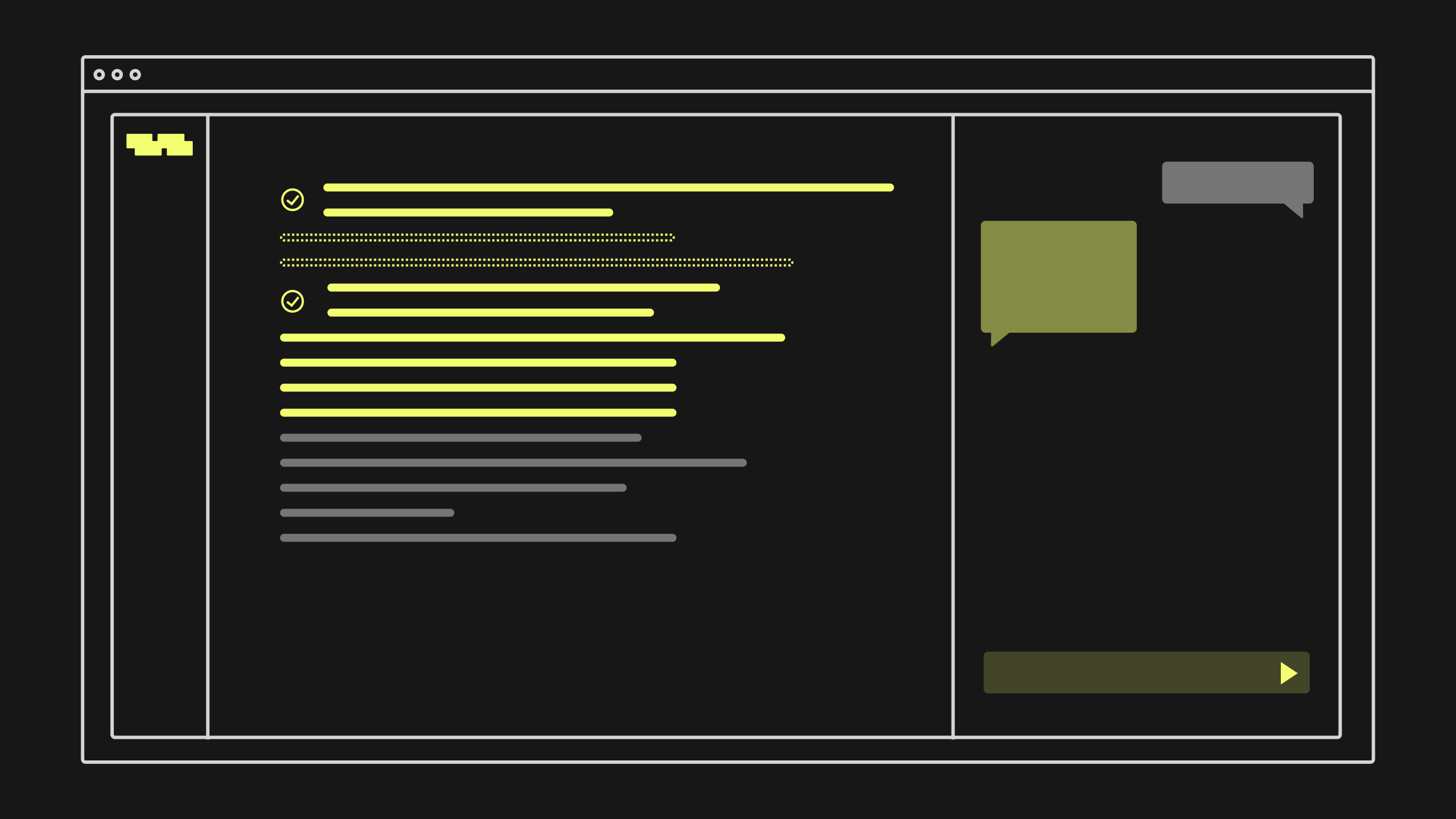
Instead, the AI acts like a new employee. It messages the human user (via Slack, Teams, or Email) and asks: “I see two dates on this invoice. Which one should I use as the Due Date?”
The human replies. The AI executes the task immediately.
- Result: The transaction is processed in minutes, not days. The SLA breach is prevented.
- The Bonus: Kognitos learns from this interaction. The next time it sees a similar invoice, it handles it autonomously.
2. Infinite Scalability
Human teams and licensed bots have capacity limits. If you have 10 people and 1,000 urgent requests, you will have SLA breaches.
Kognitos runs on a serverless, cloud-native architecture. It does not matter if you receive 50 invoices or 50,000. The platform spins up the necessary compute power to handle every single request simultaneously. Backlogs- the primary breeding ground for service level agreement breaches- are structurally impossible in a serverless environment.
Real-World Scenarios: Eliminating Violations
Let’s look at specific examples of SLA breaches and how an AI-native approach solves them.
Scenario A: The End-of-Quarter Finance Rush
- The Problem: In Accounts Payable, volume spikes at month-end. The team is overwhelmed. Invoices sit unopened for weeks. Vendors get angry.
- The Breach: SLA violation regarding “Invoice to Payment” cycle time.
- The Kognitos Fix: The system scales instantly to process thousands of documents. Unstructured data in emails is read and interpreted by AI, not keyed in by humans.
Scenario B: The “Missing Info” IT Ticket
- The Problem: An employee submits a ticket: “My laptop is broken.” They provide no details. The ticket sits in Triage for 24 hours before an agent asks, “Which model?” The user takes another 24 hours to reply.
- The Breach: SLA violation regarding “Time to First Response” or “Resolution Time.”
- The Kognitos Fix: Kognitos reads the ticket immediately. Recognizing the missing variable, it instantly replies to the user: “Please specify your laptop model so we can proceed.” It keeps the ball in the user’s court, stopping the SLA clock and accelerating resolution.
Comparing Kognitos to Breach Management Tools
There is a distinct difference between software that tracks SLA breaches and software that prevents them.
| Feature | Legacy ITSM/Monitoring Tools | Kognitos |
| Primary Function | Record and Report Breaches | Execute Processes to Prevent Breaches |
| Response to Exceptions | Log a ticket, notify a human | Ask the human for help, learn the answer |
| Scalability | Limited by seat count/licenses | Unlimited serverless concurrency |
| Actionability | Passive (Wait for human) | Active (Do the work) |
| Language | Database queries & Dropdowns | Natural English |
Kognitos does not replace your system of record (like SAP or Oracle). It acts as the intelligent orchestration layer above them, ensuring data flows correctly and rapidly so that your system of record never logs a service level agreement breach.
The Future of SLAs is Zero Breaches
The acceptance of SLA breaches as a “cost of doing business” is ending. With the advent of large language models (LLMs) and reasoning engines, there is no longer a technical excuse for a backlog.
If you can describe a process in English, Kognitos can automate it. If the process changes, you can update it in English. If the AI gets confused, it asks for help in English.
This removes the friction that causes delays. It aligns IT and Business users on a single platform where the goal isn’t “managing the queue”- it’s emptying it.
- Resource-Based: Not enough staff/bots to handle volume.
- Technical: Systems were down or automation scripts failed.
Process/Data: Information was missing, wrong, or unstructured, causing a delay in processing.